
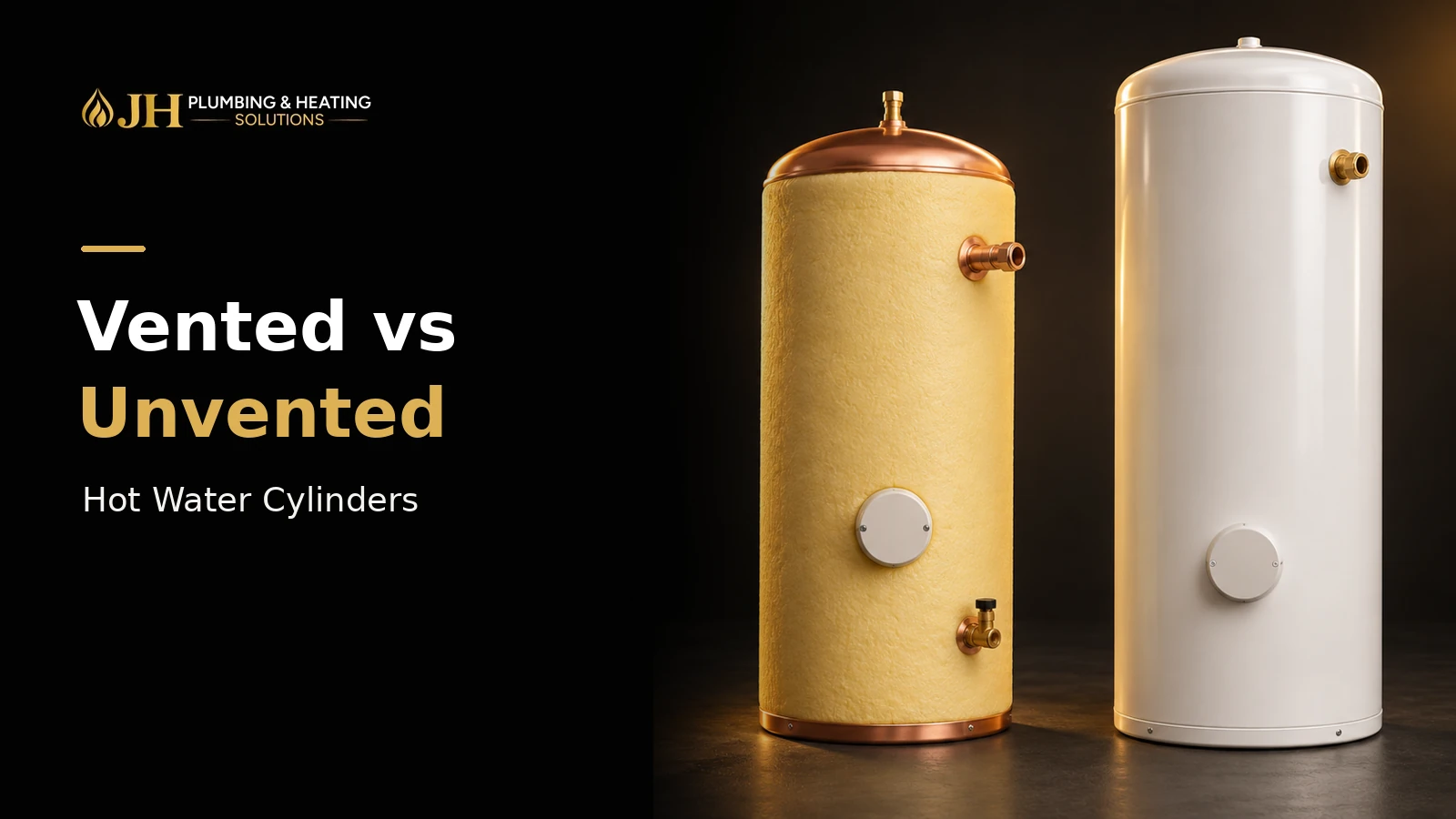
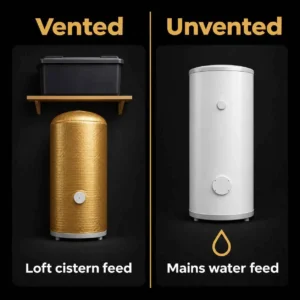
If you’re comparing vented vs unvented hot water cylinders, start with where the cold water comes from. A vented cylinder usually gets its water from a raised cold water cistern. An unvented cylinder is fed directly from the mains and stores hot water under pressure. Both store hot water. The difference matters when you turn on a shower, open a second tap or decide what can come out of the loft.
Say the upstairs shower slows down whenever someone runs the kitchen tap. An unvented cylinder might help, but only if the incoming supply and pipework can keep up. Ask the installer to investigate the weak flow before you choose what goes in the airing cupboard.
Vented vs unvented hot water cylinders at a glance
| What to compare | Vented cylinder | Unvented cylinder |
|---|---|---|
| Cold water feed | Usually a raised cold water storage cistern | Incoming mains water supply |
| What affects shower performance | Height of the cistern above the outlet, pipework and fittings | Mains pressure and flow under demand, pipework and fittings |
| Space needed | Room for the cylinder and its cold water cistern | Room for the cylinder, controls, discharge route and service access |
| Stored hot water | Usable volume and recovery depend on the cylinder and heat source | Usable volume and recovery depend on the cylinder and heat source |
| Changing the installation | A like-for-like job may let you reuse existing routes | A conversion needs a supply assessment and a suitable safety discharge route |
What does the loft tank tell you?
In a typical vented system, the raised cold water cistern feeds the cylinder and a vent pipe opens above the cistern. Gravity supplies pressure to the hot water outlets. A shower close to the height of the cistern can have less available pressure than an outlet farther below it.
If you spot a cistern in the loft, ask the installer to trace what it supplies. It may serve more than the cylinder, and a tank you see may belong to another part of the system. A vented cylinder can still be the right choice if the household gets the performance it needs and existing pipe routes work well.
What changes when the cylinder is fed from the mains?
An unvented hot water cylinder connects to the incoming mains supply. It can deliver stronger flow than an old gravity-fed setup where the mains supply is suitable. If the supply is restricted or several outlets compete for it, a new cylinder by itself may leave the underlying problem unresolved.
Ask the engineer to measure flow and pressure under realistic demand. Flow tells you how much water arrives over time. Pressure helps drive that water through the system. Both affect what you get at the shower, and a pressure reading with the taps closed gives only part of the picture. The size, condition and route of existing pipes matter too.
In England, hot water storage safety is covered by Approved Document G, including requirement G3. An unvented installation needs appropriate safety devices and a suitable discharge arrangement. Ask a competent installer to assess the property and explain how they will handle any required Building Regulations notification. JHPH’s unvented cylinder installation service covers survey, replacement and servicing options.
Three situations worth discussing at a survey
The upstairs shower is weak, but the kitchen tap is fine
Tell the installer whether the shower has always been weak or whether it changed recently. Note if other outlets behave the same way. That helps narrow down whether to look at the shower fitting, the local pipework or the way the whole home is supplied.
You’re converting the loft and want the tank out
Bring the loft layout to the survey. Ask what the cistern feeds, where the cylinder could go and which routes will still be accessible after the build. If you’re adding an en suite, include the new shower in the demand estimate. Our loft conversion and extension plumbing guide covers when to make these decisions.
Two showers run together, then the hot water runs out
Ask about both delivery and storage. A shower going weak as soon as another outlet opens points the conversation towards supply and pipework. Hot water running out after several showers calls for a look at usable cylinder capacity, reheat time and controls. Describe what happens and when so the installer can investigate the right issue.
Choosing a cylinder size and heat source
Start with the busiest part of your day. How many showers are used back to back? Does someone fill a bath while another person showers? How soon do you need the cylinder ready again? Cylinder capacity is only one part of the answer. Reheat time also depends on the heat source, the cylinder and how the controls are set up.
An indirect cylinder is heated by a separate heat source such as a compatible boiler. A direct cylinder typically uses electric immersion heating. Ask what the proposed model is designed to work with and whether the quote includes new controls. If your boiler also needs attention, compare the cylinder work and boiler installation in Milton Keynes as separate items so you can see what drives the total.
What should the quote include?
- Supply assessment. Ask what the installer measured and what performance they expect at the outlets you use together.
- Cylinder and controls. Ask which model and capacity are included, what heats it, and how long it is expected to take to recover after heavy use.
- Pipework and access. Confirm which parts stay, which need replacing and how the installer will get the cylinder into position.
- Discharge and compliance. Ask about the safety arrangements and who handles notification and paperwork where required.
- Removal and handover. Confirm who takes away old equipment, what happens to the old cistern and how long the water may be off.
A cylinder that looks right on paper still needs to fit through the door and leave room for future service. If the new location frees the airing cupboard, check what that means for pipe runs and the time it takes hot water to reach your usual outlets. For routine upkeep after installation, see our plumbing and heating maintenance service. For the bigger picture, read our Milton Keynes plumbing and heating guide.
What to confirm before the old cylinder comes out
Ask which outlets will lose water during the work, whether you will have hot water that evening and what access the installer needs. If the cylinder is going upstairs or into a new cupboard, check the route from the front door as well as the space where it will stand. A short conversation about access can prevent an expensive change to the plan on installation day.
At handover, ask the installer to show you the hot water programmer, explain the expected recovery time and tell you who to call if performance falls short. Keep the cylinder details, warranty and installation paperwork together. If you notice water discharging unexpectedly from the safety discharge arrangement, contact a qualified installer for advice and leave the safety devices alone.
Frequently asked questions
What is the difference between vented and unvented hot water cylinders?
A vented cylinder is usually fed by a cold water cistern above it. An unvented cylinder is fed from the mains and stores hot water under pressure. Both store hot water for taps and showers.
Will an unvented cylinder improve my shower pressure?
It may help if the existing system is gravity-fed and the mains supply can deliver enough flow and pressure under demand. Have the supply and pipework checked before choosing a cylinder.
Can I remove the loft tank if I switch to an unvented cylinder?
The new cylinder does not need a dedicated cold water storage cistern. Ask the installer to check everything the old cistern feeds before deciding whether it can be removed.
What size hot water cylinder do I need?
Size it around the way your household uses hot water, including simultaneous showers, bath use and the time available for reheating. Ask the installer to explain their assumptions.
Can I keep my boiler and change the cylinder?
Possibly. A suitable existing boiler may work with a new indirect cylinder. The installer should check the boiler output, controls, pipework and cylinder specification.
Get help choosing a hot water cylinder in Milton Keynes
Tell JH Plumbing & Heating Solutions what you want to improve, which outlets you use together and whether you have a cylinder or cold water cistern. Request a hot water cylinder survey to find out what can work with your existing system.