
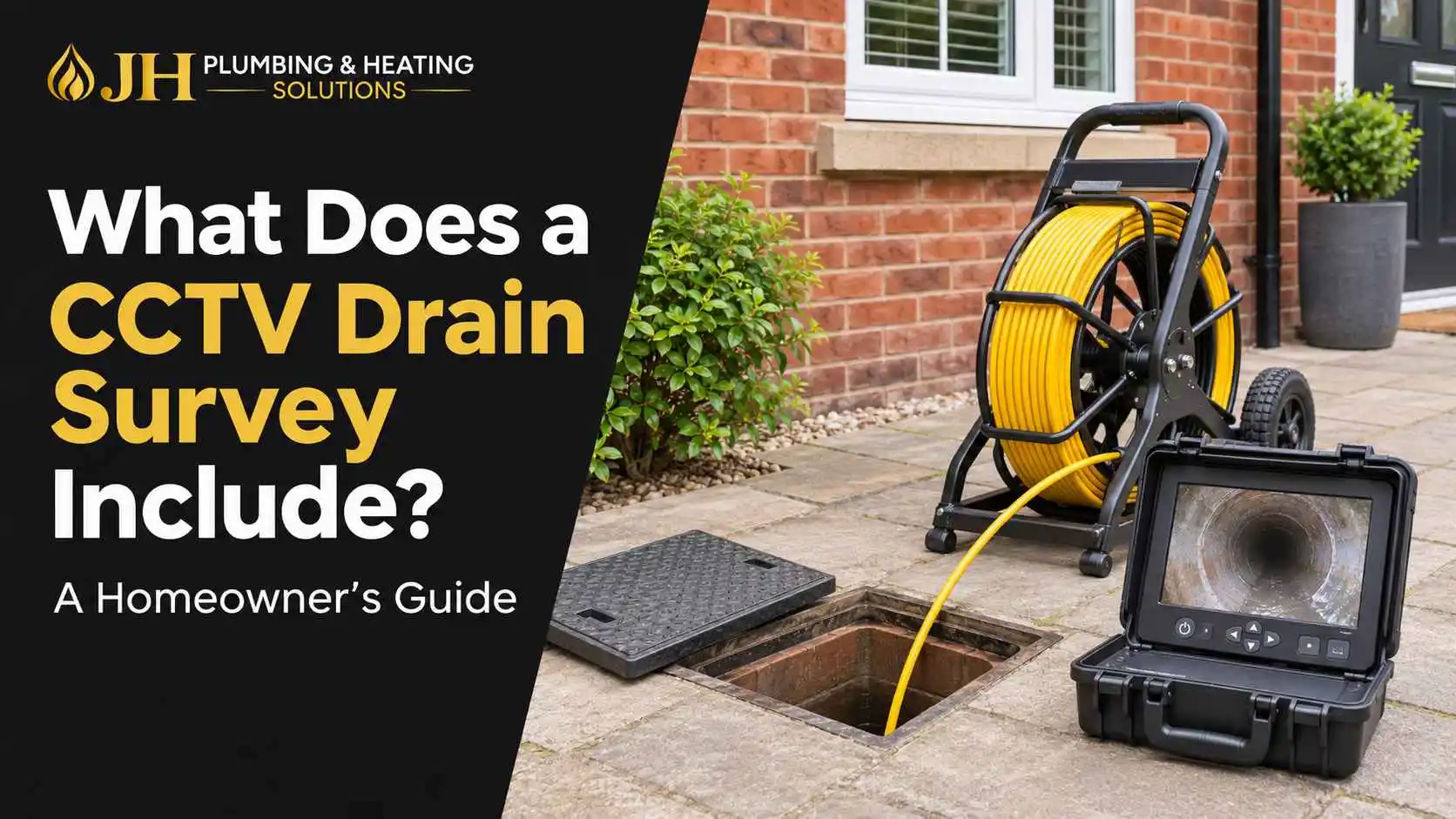
A CCTV drain survey uses a camera to inspect the inside of accessible drainage pipes. Depending on the agreed scope, you may receive recorded footage, a written survey report, a sketch of the inspected routes and recommendations for further work. Confirm those deliverables before booking. The camera can only report on the sections it reaches and can see clearly, so access, standing water and obstructions matter.
Checks at a glance
| Check | What to record or confirm |
|---|---|
| Purpose | Recurring fault, property purchase or renovation planning. |
| Coverage | Access points and the drain runs included. |
| Clearance | Whether cleaning or unblocking is included. |
| Footage | File format, labels and how you retain a copy. |
| Written report | Findings, incomplete runs and recommendations. |
| Route information | Whether a sketch or locating work is included. |
| Follow-up work | Separate prices for investigation or repairs. |
Start with the reason for the CCTV drain survey
Tell the contractor what question you need answered. A drain inspection following recurring blockages is different from a report requested during a house purchase or before an extension. The equipment may be similar, but the required coverage, report format and supporting information can differ. Your brief should explain how you intend to use the result.
For a recurring fault, describe the affected fixtures and the date of the last clearance. For a purchase, ask your adviser what they need before instructing the contractor. For building work, send the proposed plan and explain which drain routes may affect the design. Do this while comparing quotations, so the provider can say whether their service meets that purpose.
JHPH’s drainage solutions service covers investigation and remedial work. Describe the property and the outcome you need when requesting a survey. Ask specifically whether the quotation includes a formal report and recorded footage, particularly if another professional needs to review them.
Agree which drains and access points are included
Ask the contractor to identify the starting access points and the drain runs they expect to inspect. Existing plans, previous survey reports and a simple sketch of the property can help. A quote saying “camera survey” needs enough detail to show whether it covers one troublesome run or a wider inspection of the accessible drainage.
Mention extensions, outbuildings and changes to bathrooms or kitchens. A pipe might connect differently from what a floor plan suggests. Ask how the contractor will record a route that cannot be confirmed. If tracing equipment or an accurate location measurement is required, check whether that is included, available as an extra or outside the proposed service.
Tell the team about access restrictions before they arrive. A cover beneath stored materials, a locked side passage or a run reached through neighbouring land can affect the inspection. Arrange any necessary access with the people responsible. Keep children and pets away from the working area, and leave opening inspection chambers to the contractor.
Understand how the camera inspection works
The operator introduces a camera through suitable access and records the inside of the pipe as it travels along the run. The inspection can show visible conditions such as deposits, roots or damaged joints where the view is clear. Ask how each recording will identify the access point, direction of travel and distance along the inspected section.
The quality of the view matters as much as the camera reaching the pipe. Water, debris or an obstruction can hide part of the pipe surface. Ask the operator to distinguish a confirmed finding from a suspected one and to identify sections where inspection stopped. A report should make those limitations easy to find.
A CCTV drain survey examines the internal view available during that visit. It does not reveal every condition outside the pipe or guarantee that an unseen section is sound. If the problem concerns an intermittent fault or a connection the camera cannot reach, ask what further investigation would answer the remaining question.
Check whether clearance is required before inspection
If a pipe is blocked, the camera may not be able to reach the section of interest. Ask how the contractor handles this situation and whether the initial quote includes clearance, cleaning, a second inspection or only the camera visit. Request separate prices for work that may be needed before a useful recording can be made.
Where practical, ask whether the existing condition will be documented before cleaning as well as afterwards. The first view may help explain the symptom, and the later view may show more of the pipe surface. The contractor should decide the workable sequence based on access and what they encounter, then explain any change in scope before proceeding.
For an active blockage, our blocked outside drain guide helps you organise the symptoms. If wastewater is backing up or overflowing, tell the team when booking so they can assess the immediate clearance need. An appointment intended only to record footage may not cover that additional work.
Ask what the recorded footage will contain
Request footage that can be matched to each inspected run. Ask whether files are supplied through a download link or another format, how long access remains available and whether the recipient can retain a copy. If a solicitor, surveyor or insurer will use it, confirm their preferred format in advance.
The recording should support the findings in the written report. A useful reference lets the reader locate a relevant point in the footage and understand which part of the property it relates to. Ask how the operator labels changes of direction, the end of a run or an incomplete section so the files remain usable after the visit.
Keep the original files with the quote and report. A short edited clip can illustrate one problem, but it may not show the extent of inspection. If you only receive selected images, check whether full recorded footage was part of the agreed service and ask how to obtain it.
Read the survey report alongside its limitations
Look for the property address, inspection date, access points, the runs surveyed and the reason for the inspection. Then review the findings and any recommended actions. The survey report should distinguish what was observed from what still needs confirmation. Ask for a plain-language explanation if codes or abbreviations make the findings difficult to follow.
Check whether any section was not reached, obscured or only partly inspected. An incomplete survey can still provide useful evidence, provided the limits are recorded. Ask why the inspection ended and which further step could complete it. That may involve clearance, another access point or a different method of investigation.
If a report is required for a specific professional purpose, confirm the required reporting standard before commissioning it. The Water UK guidance on sewer CCTV inspection describes reporting standards in the water industry. Ask the intended recipient which standard and qualification requirements apply to your particular brief.
Separate observations from repair recommendations
A visible defect and a repair proposal are connected, but they are separate parts of the decision. Ask the contractor to point to the relevant footage, explain the likely effect on drainage and describe which options they recommend. If they suggest further investigation before pricing repairs, ask what that investigation needs to establish.
Request a quotation that identifies the section to be treated, the proposed method and what will be checked afterwards. If the work involves access through paving or a garden, ask who will reinstate it. A camera inspection quotation does not necessarily include excavation, lining, repair or a completion inspection.
Discuss urgency in practical terms. Ask whether the finding relates to an active blockage, a recurring symptom or an issue to monitor. Avoid treating every mark in a survey report as requiring the same response. The contractor should explain why the recommended timing fits the observed condition and the way the drain is currently performing.
Check ownership before instructing repair work
A camera image can show a drain’s condition without deciding who owns the affected pipe. Before agreeing repairs, check responsibility with the relevant sewerage company, landlord or property manager. The answer can depend on the route, whether it serves other properties and whether the pipe has been adopted. A property boundary alone may not settle it.
Anglian Water’s sewer responsibility guidance describes distinctions between private and public pipes, including differences for some shared pipes. Use your actual provider’s guidance and ask them to confirm uncertain cases. Keep their reference number or written response with the inspection records.
If neighbouring homes report symptoms at the same time, mention that when contacting the provider. Tell the survey contractor what you have already reported so the two investigations can be coordinated. Ask for the affected run to be identified clearly enough that the responsible party can understand where further work is proposed.
Prepare a survey brief for a house purchase
Ask your conveyancer or building surveyor what issue they want the drainage report to address. They may need a particular scope or evidence about a location. Send that request to the drainage contractor before accepting the quote, and ask whether access to all relevant parts is likely to be available during the visit.
Arrange the appointment with whoever controls access to the property. Check whether inspection covers are accessible, whether the contractor needs anyone present and whether any preparation is required. If an access point is unavailable, ask how the limitation will appear in the survey report and whether another visit would be needed.
Allow time for the report to be delivered and reviewed. Ask for the expected turnaround and whether recommendations can be discussed with your adviser. If a finding leads to a repair estimate, obtain that estimate as a separate document. Keep the technical observation distinct from discussions about price or negotiations over the property.
Coordinate a drain survey with renovation plans
Before an extension or a bathroom layout change, explain which routes matter to the project. Share the plan and ask the designer or relevant professional what location or condition information they need. A general camera recording may not supply the measurements or route confirmation required for a particular design decision.
Our plumbing guide for loft conversions and extensions covers planning connections before building work starts. The bathroom renovation plumbing checklist helps identify decisions about waste routes and access. Use those plans to make the drainage brief more specific.
Tell the contractor when other trades need the findings. Agree who will receive the survey report and who decides whether further work is needed before the building programme proceeds. If the proposed layout changes after inspection, ask whether the previous coverage still answers the design questions or whether a different run must be inspected.
An example of a recurring blockage brief
Imagine a kitchen waste line that runs normally for a few weeks after clearance, then slows again. Give the contractor the clearance dates and describe whether other fixtures are affected. Ask which section their CCTV drain survey will inspect, whether the route is accessible and how they will record the point where an obstruction or visible defect is found.
If the first view is obscured, ask whether a clearer inspection can follow the necessary clearance and what that would cost. Request the findings and limitations together. A record that names the inspected run, explains where the camera stopped and lists the next practical step is easier to act on than an unlabeled clip of dirty pipework.
This is an example brief, not evidence of a particular defect. The aim is to match the survey to the recurring symptom. The report may support repair, further investigation or a change in maintenance, depending on what is actually observed. Ask the contractor to connect each recommendation to the recorded finding.
Questions to settle before the inspection date
Confirm the access arrangements, the expected time on site and who needs to be available. Ask whether the contractor needs a water supply or other facilities and where equipment will be placed. Tell them about locked gates, restricted parking and surfaces that need protecting. A straightforward access plan helps keep the booked visit focused on inspection.
Agree who receives the survey report, the expected delivery date and how you can ask questions about its findings. If another professional needs to use it, provide their requirements before the visit. Ask whether the contractor can supply that format and whether any extra interpretation or revised plan would be charged separately.
Finally, confirm the instruction if the inspection reveals a need for extra work. Ask the contractor to contact you with the finding and price before going beyond the agreed scope. Keep an email copy of the brief, the quote and the agreed deliverables so you can check the result against the service you commissioned.
Compare the full survey cost, including possible extras
Ask whether the quotation is for one run, a time allowance or all accessible drains within an agreed scope. Check whether VAT applies and whether the price includes footage, a written report and a sketch. A lower headline price may cover a different service, so compare the stated deliverables before choosing.
List possible additional work separately. Examples to clarify include clearance before filming, locating the route, dealing with inaccessible covers and returning after an obstruction has been removed. Ask when a further charge would be discussed and whether you can decline that extra work after seeing the initial findings.
JHPH has not supplied a property-specific survey price for this guide. Access, coverage and the intended report all affect the scope to be quoted. Request a drainage assessment or survey quote with your postcode and reason for the inspection so the team can confirm what is appropriate and available.
Keep an inspection record that remains useful later
Store the report, footage, sketch and any repair quotation together. Label them with the inspection date and property address. Keep a note of which runs were inspected and which remained incomplete. If you receive a download link, save the files while access is available and check that they open on a device you use.
After repairs, ask what completion evidence is included. If another camera inspection is planned, request a clear reference to the repaired section and the result observed. Keep the original inspection as well as the later files. That gives the next contractor the history if a symptom returns or new building work affects the drainage.
For wider property maintenance, see our Milton Keynes plumbing and heating guide. To arrange work, send JHPH the property location, the affected fixtures and any earlier report. Include access restrictions and the report’s intended use so the next step starts with a clear brief.
Frequently asked questions
Does a CCTV drain survey include clearing a blockage?
Only if clearance is part of the agreed scope. Ask whether cleaning, clearance and a further camera inspection are included or quoted separately.
Will I receive a written report and video?
Confirm this before booking. A camera visit can be quoted with different deliverables, so ask for recorded footage, a written report and any required sketch to be listed.
Can a camera survey inspect every drain?
Coverage depends on access, the pipe route and the view available. Obstructions, standing water or inaccessible sections can limit inspection and should be recorded in the report.